Saturday, May 7, 2011
Citroen Gt Nice Images And Gallery
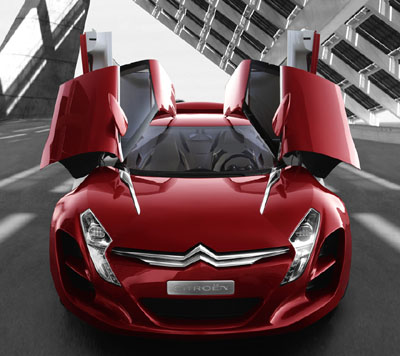
The amazing GT by CITROËN is the first ever car to be specifically designed to bring the virtual and real worlds together. The car makes its global premiere at the Paris Motor Show where visitors can actually drive the car in a true to life simulator on the Citroën stand.
GT by CITROËN, a joint venture between Citroën and the makers of Gran Turismo, was created for the eagerly anticipated 5th game in the multi-million selling Playstation series.
At almost five metres long, GT by CITROËN packs the latest hi-tech racing equipment into an exaggerated sporty frame. Planted on 21-inch, diamond-effect, aluminium wheels, the car's gullwing doors, over-sized rear end with mobile spoiler, gaping air intakes and flat underside exude the qualities of an accomplished racer.
With chrome chevrons on the smooth, aerodynamic, front end asserting the car's Citroën identity, the GT by CITROËN is bursting with styling cues typical of the Company's creative flair. The sharp lines and sculpted body are emphasised by the white-to-grey flared paint work which gives the car a forceful look and an impression of speed - even when it's standing still.
The sleekly muscled racer sports a large wraparound windscreen adding to the impact of the car's size and dynamic appearance. Penetrating blue LED headlamps and slim-line carbon fibre rear view mirrors - which appear to be suspended in mid-air - add to GT by CITROËN's futuristic racing style.
Premium materials used throughout GT by CITROËN's hi-tech interior reflect the car's distinguished and refined personality. In contrast to its light body work, the cabin features a darker, more brooding colour scheme with two padded racing seats finished in black leather and fitted with four point harnesses. The dark leather, along with copper and steel touches inside the cabin and a low-slung driving position, create an opulent and powerful racing environment. Important on-board data is displayed via a red LED head-up display, allowing drivers to maintain focus on the track.
In the game, the GT by CITROËN showcases Citroën's dedication to the environment with an electric drive train powered by a fuel cell, totally eliminating pollutant emissions.
Kazanori Yamauchi, President of Polyphony Digital Inc and creator of Gran Turismo, commented, "GT by CITROËN shows how the worlds of virtual and real-life motoring can join together to create a truly innovative partnership. To see the GT by CITROËN take shape in our game studios and then for real has been a truly unique experience - as our work normally stays in the digital world."
citroen c4 coupe interior
Citroen VTR Plus-Interior
citroengt gran turismo images
citroen Large Image
citroen gt concept
Citroen GT Concept 11
GT by CITROËN, a joint venture between Citroën and the makers of Gran Turismo, was created for the eagerly anticipated 5th game in the multi-million selling Playstation series.
At almost five metres long, GT by CITROËN packs the latest hi-tech racing equipment into an exaggerated sporty frame. Planted on 21-inch, diamond-effect, aluminium wheels, the car's gullwing doors, over-sized rear end with mobile spoiler, gaping air intakes and flat underside exude the qualities of an accomplished racer.
With chrome chevrons on the smooth, aerodynamic, front end asserting the car's Citroën identity, the GT by CITROËN is bursting with styling cues typical of the Company's creative flair. The sharp lines and sculpted body are emphasised by the white-to-grey flared paint work which gives the car a forceful look and an impression of speed - even when it's standing still.
The sleekly muscled racer sports a large wraparound windscreen adding to the impact of the car's size and dynamic appearance. Penetrating blue LED headlamps and slim-line carbon fibre rear view mirrors - which appear to be suspended in mid-air - add to GT by CITROËN's futuristic racing style.
Premium materials used throughout GT by CITROËN's hi-tech interior reflect the car's distinguished and refined personality. In contrast to its light body work, the cabin features a darker, more brooding colour scheme with two padded racing seats finished in black leather and fitted with four point harnesses. The dark leather, along with copper and steel touches inside the cabin and a low-slung driving position, create an opulent and powerful racing environment. Important on-board data is displayed via a red LED head-up display, allowing drivers to maintain focus on the track.
In the game, the GT by CITROËN showcases Citroën's dedication to the environment with an electric drive train powered by a fuel cell, totally eliminating pollutant emissions.
Kazanori Yamauchi, President of Polyphony Digital Inc and creator of Gran Turismo, commented, "GT by CITROËN shows how the worlds of virtual and real-life motoring can join together to create a truly innovative partnership. To see the GT by CITROËN take shape in our game studios and then for real has been a truly unique experience - as our work normally stays in the digital world."
citroen gt conceptCitroen Pictures And Gallery
Citroën is a major French automobile manufacturer, part of the PSA Peugeot Citroën group.
Founded in 1919 by French industrialist André-Gustave Citroën (1878-1935), Citroën was the first mass-production car company outside the USA and pioneered the modern concept of creating a sales and services network that complements the motor car. Within eight years Citroën had become Europe’s largest car manufacturer, and the 4th largest in the world.
Logo used until 2009
The Eiffel Tower served as a billboard for Citroën from 1925 to 1934.
Citroën earned a reputation for innovation and revolutionary engineering, which is reflected in the company’s slogan “Créative Technologie”. Its history of innovation began with its founding when (as noted above), André-Gustave Citroën introduced the first industrial mass production of a vehicles outside the United States (a technique he developed mass-producing armaments for the French military in World War I). In 1924, Citroën produced Europe’s first all-steel-bodied car, the B-10. In 1934, Citroën secured its reputation for innovation with its Traction Avant not only the world’s first mass-produced front-wheel drive car, but also one of the first cars to feature monocoque-type body. In 1954 Citroën produced the world's first hydropneumatic self-levelling suspension system, then in 1955 the revolutionary Citroën DS, the first European production car with disc brakes. In 1967, Citroën introduced the first swiveling headlights in several models, allowing for greater visibility on winding roads. The brand celebrated its 90th Anniversary in 2009.
citroen logo
citroen airlounge front
citroen c metisse concept front
citroen c5
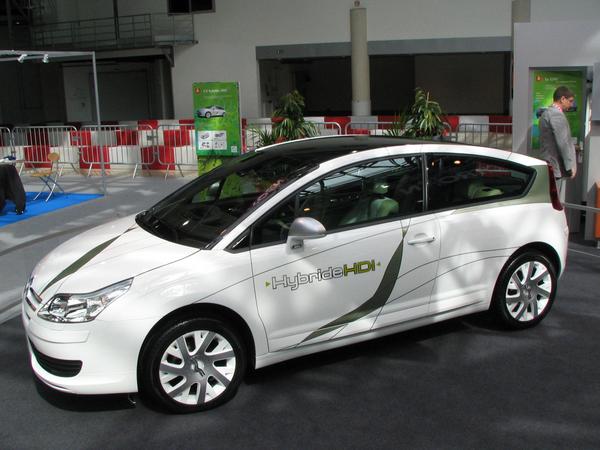
citroen c4 hybrid
Founded in 1919 by French industrialist André-Gustave Citroën (1878-1935), Citroën was the first mass-production car company outside the USA and pioneered the modern concept of creating a sales and services network that complements the motor car. Within eight years Citroën had become Europe’s largest car manufacturer, and the 4th largest in the world.
Logo used until 2009
The Eiffel Tower served as a billboard for Citroën from 1925 to 1934.
Citroën earned a reputation for innovation and revolutionary engineering, which is reflected in the company’s slogan “Créative Technologie”. Its history of innovation began with its founding when (as noted above), André-Gustave Citroën introduced the first industrial mass production of a vehicles outside the United States (a technique he developed mass-producing armaments for the French military in World War I). In 1924, Citroën produced Europe’s first all-steel-bodied car, the B-10. In 1934, Citroën secured its reputation for innovation with its Traction Avant not only the world’s first mass-produced front-wheel drive car, but also one of the first cars to feature monocoque-type body. In 1954 Citroën produced the world's first hydropneumatic self-levelling suspension system, then in 1955 the revolutionary Citroën DS, the first European production car with disc brakes. In 1967, Citroën introduced the first swiveling headlights in several models, allowing for greater visibility on winding roads. The brand celebrated its 90th Anniversary in 2009.
citroen airlounge frontThursday, May 5, 2011
Ferrari Nice Pictures and History
Ferrari S.p.A. is an Italian sports car manufacturer based in Maranello, Italy. Founded by Enzo Ferrari in 1929, as Scuderia Ferrari, the company sponsored drivers and manufactured race cars before moving into production of street-legal vehicles as Ferrari S.p.A. in 1947. Throughout its history, the company has been noted for its continued participation in racing, especially in Formula One, where it has had great success.
ferrary logo
Ferrari Crash
ferrari running
ferrari doors open
ferrari enzo novitec
ferrari f430 spider
ferrary logo
ferrari enzo novitecBmw Beautifull Images and Histery
BMW AG originated with three other manufacturing companies, Rapp Motorenwerke and Bayerische Flugzeugwerke (BFw) in Bavaria, and Fahrzeugfabrik Eisenach in Thuringia. Aircraft engine manufacturer Rapp Motorenwerke became Bayerische Motorenwerke in 1916 when the board of directors fired founder Karl Rapp and changed the company name. The engine manufacturer, which built proprietary industrial engines after World War I, was then bought by the owner of BFw who then merged BFw into BMW and moved the engine works onto BFw's premises. BFw's motorcycle sideline was improved upon by BMW and became an integral part of their business.
BMW became an automobile manufacturer in 1929 when it purchased Fahrzeugfabrik Eisenach, which, at the time, built Austin Sevens under licence under the Dixi marque. BMW's team of engineers progressively developed their cars from small Seven-based cars into six-cylinder luxury cars and, in 1936, began production of the BMW 328 sports car. Aircraft engines, motorcycles, and automobiles would be BMW's main products until World War II. During the war, against the wishes of its director Franz Josef Popp, BMW concentrated on aircraft engine production, with motorcycles as a side line and automobile manufacture stopped altogether.
After the war, BMW survived by making pots, pans, and bicycles until 1948, when it restarted motorcycle production. Meanwhile, BMW's factory in Eisenach fell in the Soviet occupation zone and the Soviets restarted production of pre-war BMW motorcycles and automobiles there. This continued until 1955, after which they concentrated on cars based on pre-war DKW designs. BMW began building cars in Bavaria in 1952 with the BMW 501 luxury saloon. Sales of their luxury saloons were too small to be profitable, so BMW supplemented this with building Isettas under licence. Slow sales of luxury cars and small profit margins from microcars caused the BMW board to consider selling the operation to Daimler-Benz. However, Herbert Quandt was convinced to purchase a controlling interest in BMW and to invest in its future.
Quandt's investment, along with profits from the BMW 700, brought about the BMW New Class and BMW New Six. These new products, along with the absorption of Hans Glas GmbH, gave BMW a sure footing on which to expand. BMW grew in strength, eventually acquiring the Rover Group (most of which was later divested), and the license to build automobiles under the Rolls-Royce marque.
BMW_Logo
bmw interior beautiful
2011 bmw m3
BMW Interior
bmw m1

bmw m3 pic
BMW became an automobile manufacturer in 1929 when it purchased Fahrzeugfabrik Eisenach, which, at the time, built Austin Sevens under licence under the Dixi marque. BMW's team of engineers progressively developed their cars from small Seven-based cars into six-cylinder luxury cars and, in 1936, began production of the BMW 328 sports car. Aircraft engines, motorcycles, and automobiles would be BMW's main products until World War II. During the war, against the wishes of its director Franz Josef Popp, BMW concentrated on aircraft engine production, with motorcycles as a side line and automobile manufacture stopped altogether.
After the war, BMW survived by making pots, pans, and bicycles until 1948, when it restarted motorcycle production. Meanwhile, BMW's factory in Eisenach fell in the Soviet occupation zone and the Soviets restarted production of pre-war BMW motorcycles and automobiles there. This continued until 1955, after which they concentrated on cars based on pre-war DKW designs. BMW began building cars in Bavaria in 1952 with the BMW 501 luxury saloon. Sales of their luxury saloons were too small to be profitable, so BMW supplemented this with building Isettas under licence. Slow sales of luxury cars and small profit margins from microcars caused the BMW board to consider selling the operation to Daimler-Benz. However, Herbert Quandt was convinced to purchase a controlling interest in BMW and to invest in its future.
Quandt's investment, along with profits from the BMW 700, brought about the BMW New Class and BMW New Six. These new products, along with the absorption of Hans Glas GmbH, gave BMW a sure footing on which to expand. BMW grew in strength, eventually acquiring the Rover Group (most of which was later divested), and the license to build automobiles under the Rolls-Royce marque.
2011 bmw m3bmw m3 pic
Subscribe to:
Posts (Atom)